Roman coin hoard discovered by amateur detectorist
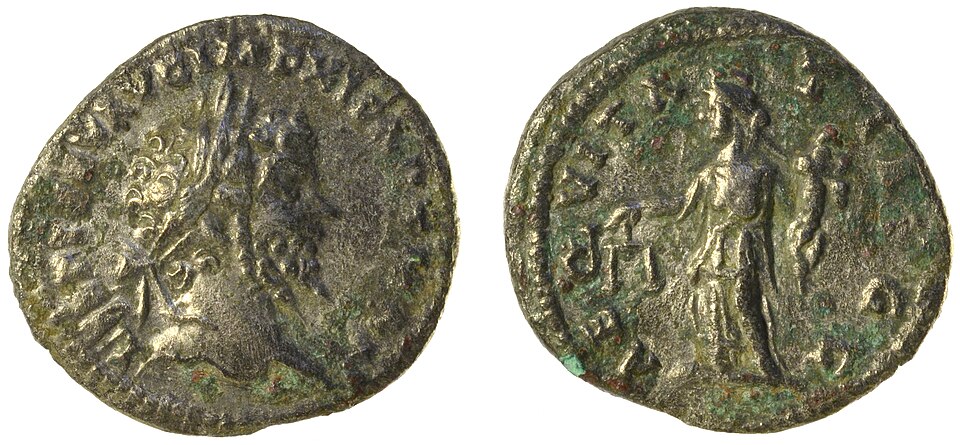
A newcomer to detecting found 268 Roman silver denarii on Herefordshire farmland in 2019. Six years on, the hoard has come home and is on free public display in Leominster.
Ref 75
21 published discoveries from England — coins, hoards, jewellery and artefacts recovered by detectorists and archaeologists.
A newcomer to detecting found 268 Roman silver denarii on Herefordshire farmland in 2019. Six years on, the hoard has come home and is on free public display in Leominster.
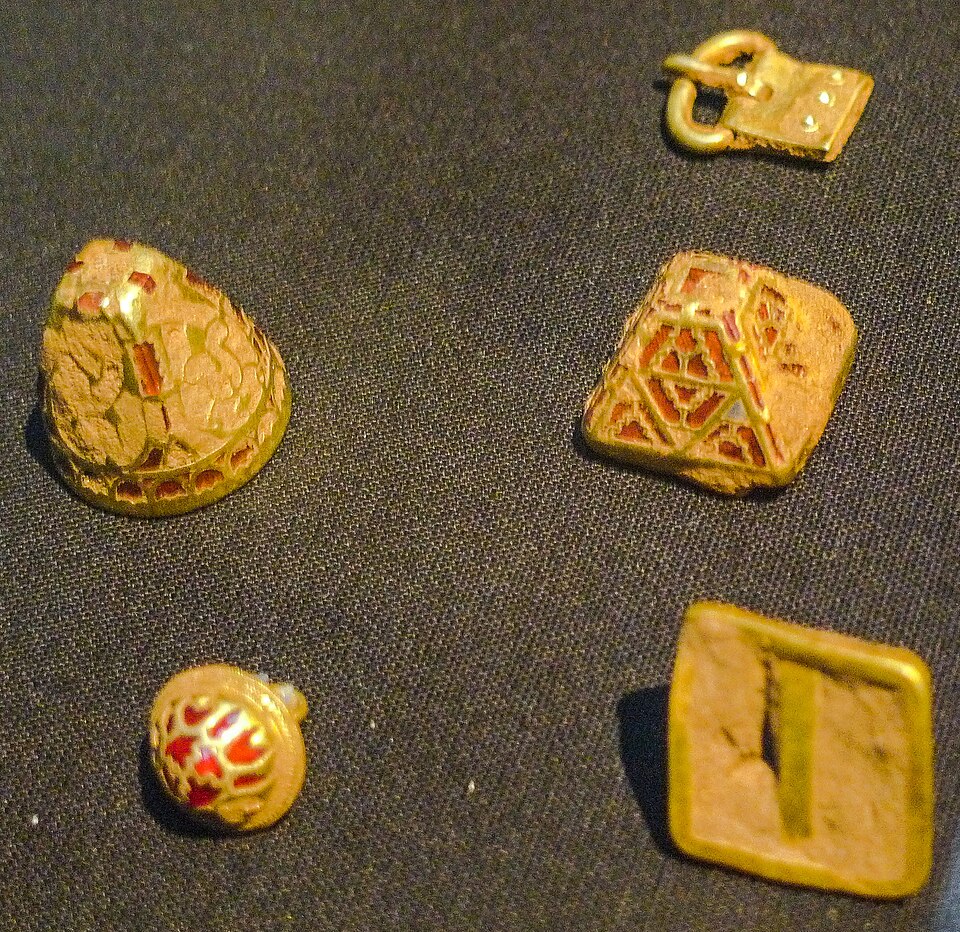
In 2009 a Staffordshire detectorist found the first pieces of what is still the largest hoard of Anglo-Saxon gold ever discovered: almost 4,000 objects and fragments, most of them fittings from weapons.
A first-time detectorist found a two-foot suspected bomb on Caister beach within an hour of switching on his birthday present. The tide covered it before bomb disposal could reach it.
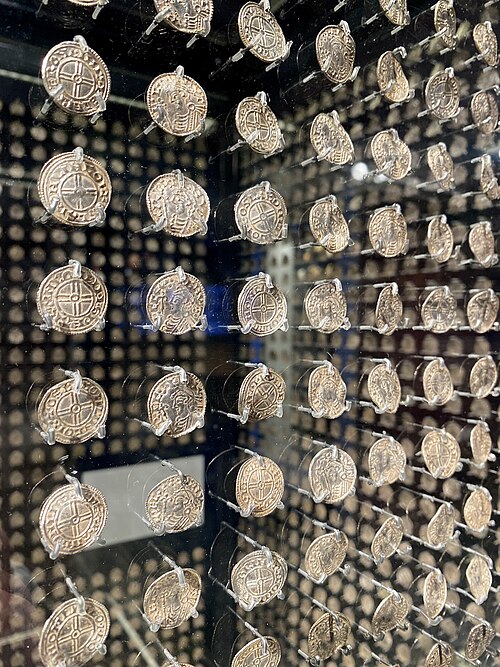
More than 5,000 silver pennies of Æthelred II and Cnut, buried in a lead parcel around 1035 and found at a detecting club rally near Buckingham in 2014. Valued at £1.35 million, the hoard is now in Aylesbury.
A 14th-century gold ring, discovered in October 2023 by a metal detectorist between Bourton and Draycote in the borough of Rugby, is on display at Rugby Art Gallery and Museum. Featuring an oval bezel with incised circle decorations, small panels with horizontal grooves on its shoulders, and the remains of a dark red cabochon stone, the medieval finger ring was recorded by the British Museum's Portable Antiquities Scheme and officially declared "treasure" due to its age and precious metal composition. Now featured in the museum's "Archaeology Now" section, local leaders highlighted the find as evidence of Rugby's significance as a historical travel route long preceding the construction of the town centre's original St Andrew's Church.
A rare Middle to Late Bronze Age gold ribbon fragment, discovered by metal detectorist Paul Davis near Hilborough in September 2025, has been officially declared treasure at a Norfolk inquest. Dating back to between 1400 BC and 700 BC, the 4.26-gram hammered gold strip is thought to be part of an ancient penannular bracelet or ribbon torc worn over 3,000 years ago. Following the ruling under the Treasure Act 1996, Norwich Castle Museum has expressed interest in acquiring the piece to add to its archaeology collection and put it on public display.
Metal detectorist Adam McLelland discovered a rare hoard of nearly 2,000-year-old Roman bronze objects in the Chilterns, Buckinghamshire, which was subsequently excavated with the help of local council archaeologists and Oxford Archaeology. The collection features exceptional items, including two enamelled mounts, a glass gaming counter, a bone die, and notably, the intact pieces and internal "peas" of a fragile bronze rattle—a rare ceremonial artefact seldom found in Britain. Following a private donation to cover essential conservation work, the metal detectorist and landowner donated the full set of artefacts to the Discover Bucks Museum in Aylesbury, where they are being put on public display.
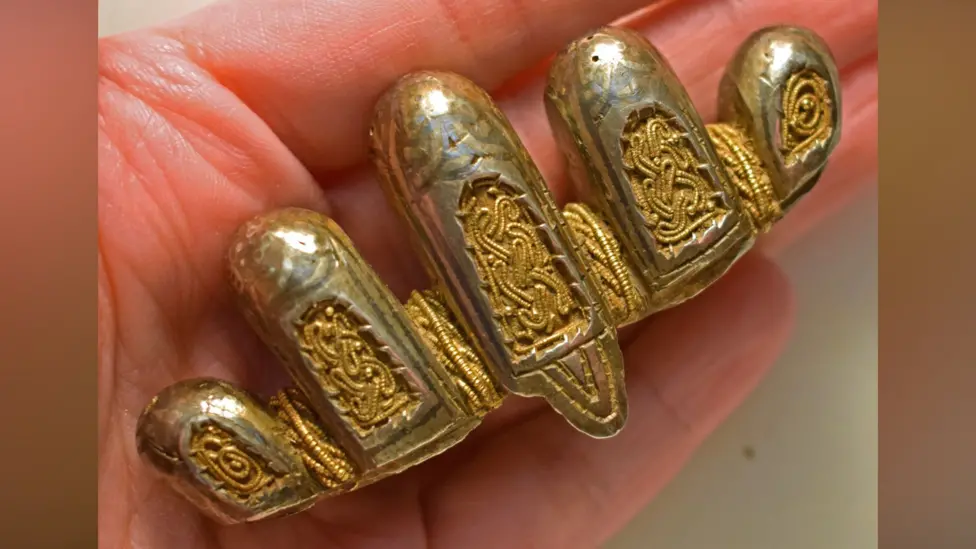
Andy Green, a 56-year-old electrician and beginner metal detectorist, unearthed a rare gold and silver Viking-era sword pommel near Brigstock, Northamptonshire, in 2019. Recently declared official treasure, the five-lobed pommel measures nearly 75mm long, features intricate gold wire beadwork, and is dated between AD 900 and 1120—a period of Scandinavian colonization in the Danelaw region. Experts believe the highly decorated artifact was either crafted in Gotland, Sweden, or made locally by a skilled metalworker from that region for a high-status owner. The find is also linked to a separate gold wire hilt loop discovered nearby in 2018, and a local Northamptonshire museum is currently hoping to acquire the piece for display.