Staffordshire Hoard: Metal detectorist uncovers gold; museums secure treasure
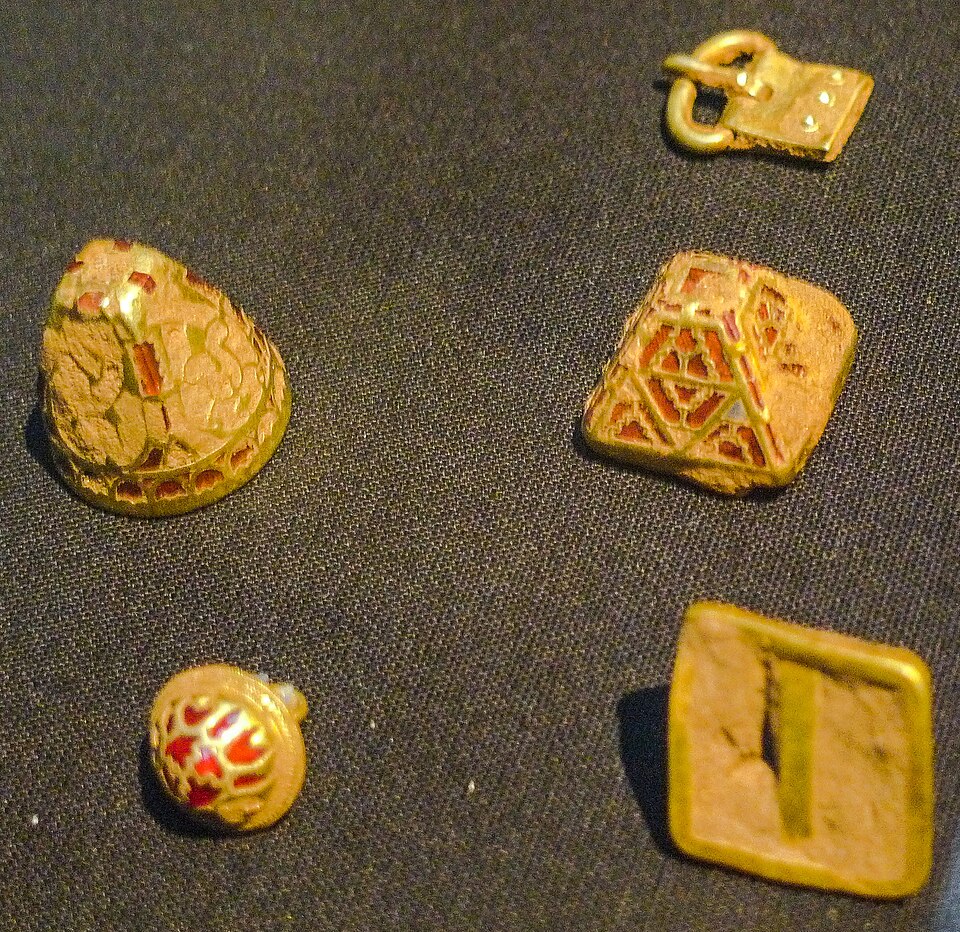
In 2009 a Staffordshire detectorist found the first pieces of what is still the largest hoard of Anglo-Saxon gold ever discovered: almost 4,000 objects and fragments, most of them fittings from weapons.
In July 2009, local detectorist Terry Herbert began finding gold in a field belonging to farmer Fred Johnson near the village of Hammerwich, outside Lichfield in Staffordshire. Within days it was clear this was something exceptional.
Archaeologists spent four weeks excavating an area of 155 square metres. Every object they recovered came from the plough soil near the surface: the field had been ploughed in the autumn of 2008, and the plough had broken into the buried hoard and spread it.
The finds came to just under 4,000 objects and fragments, most of them war-gear: gold and garnet fittings from sword hilts, pommel caps, and pieces of a high-status helmet that has since been reconstructed. The hoard was buried in the seventh century, probably between AD 650 and 675, in what was then the Anglo-Saxon kingdom of Mercia. Who buried it, and why so much of it was stripped from weapons, is still debated.
A coroner's inquest declared it Treasure, and it was valued at £3.285 million. Birmingham and Stoke-on-Trent city councils bought it with public donations and major grants, and the reward was shared equally between the finder and the landowner. It is now cared for by Birmingham Museums Trust and the Potteries Museum and Art Gallery in Stoke-on-Trent, and hundreds of pieces are on free display in Birmingham.
The field had not finished giving. When it was ploughed again in 2012, for the first time since the discovery, a few more pieces from the hoard came to the surface.
First reported in 2009; recalled by The Times of India (via inkl, 22 September 2026). Written for Global Finds from that report and Birmingham Museums' account of the discovery. Photo: Staffordshire Hoard pommel caps, Jon Callas, Wikimedia Commons, CC BY 2.0.
Approximate location52.66, -1.89View on map
Source: inkl