How a first-time metal detectorist found suspected bomb on Norfolk beach
A first-time detectorist found a two-foot suspected bomb on Caister beach within an hour of switching on his birthday present. The tide covered it before bomb disposal could reach it.
Paul Rushworth's partner, Lisa Roach, gave him a metal detector for his birthday while the couple were staying at their chalet in Hemsby, in Norfolk. The next afternoon, Saturday 26 September, they took it down to the beach at Caister-on-Sea to try it out.
Within an hour he had a signal worth digging. As he worked down, the sand turned orange, and when he cleared it away by hand he found a metal object about two feet long, lying roughly two feet down. Mr Rushworth, who served in the RAF, recognised it as a possible bomb and told his partner to call the Coastguard. At first she thought he was joking.
They called at 3.50 pm and sent photographs. Coastguard teams from Gorleston and Winterton arrived in under 40 minutes, cleared the beach and passed the details to Norfolk Police and the bomb disposal team. The couple said they felt it was better to be safe than sorry.
The tide then came in over the object before it could be examined. When coastguard officers went back on the Sunday morning, it was no longer visible, and the beach was reopened.
So the object has not been identified, and as far as anyone knows, it is still under the sand. Anyone detecting at Caister who finds something similar should leave it where it is, move away and call 999 for the Coastguard.
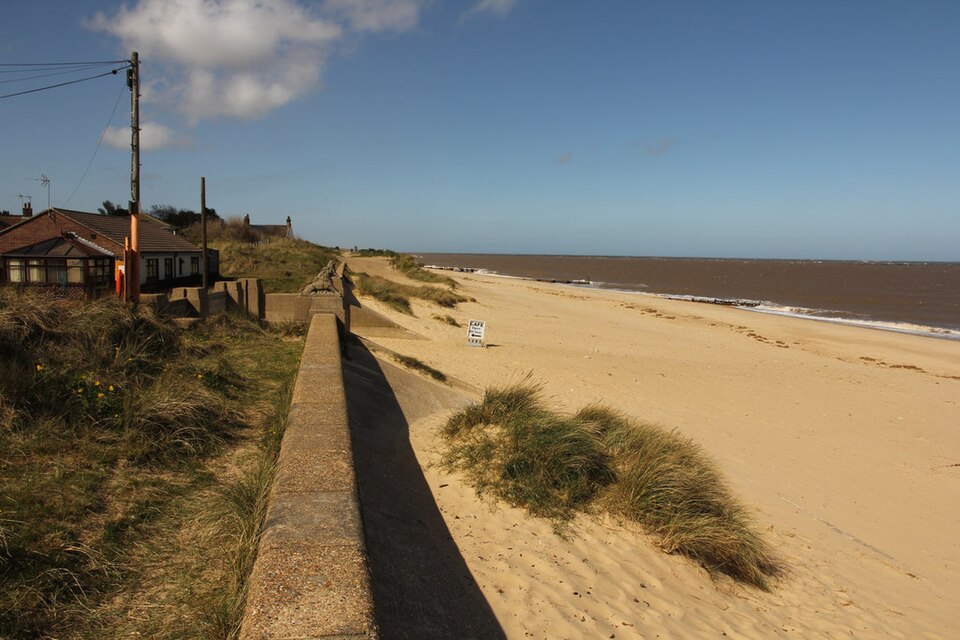
Reported by the Eastern Daily Press (27 September 2026). Written for Global Finds from that report. Photo: Caister-on-Sea beach, Richard Croft, geograph.org.uk via Wikimedia Commons, CC BY-SA 2.0.
Those four are for England and Wales, where the Portable Antiquities Scheme records finds and the Treasure Act decides what must be reported.
Scotland runs its own system, and every find is reportable there — not only treasure. Treasure Trove Unit ›
The Republic of Ireland is different again, and severely so. Searching for archaeological objects without the Minister’s written consent is a criminal offence carrying fines or imprisonment, and the definition is broad enough to cover coins, buttons and buckles of almost any age. Do not assume British rules travel with you. The law, from the National Museum ›
Northern Ireland is stricter still. The Treasure Act applies and finds go to National Museums NI within fourteen days, but any searching that involves digging — metal detecting expressly included — needs a licence, and licences are only granted for archaeological projects. National Museums NI ›
This site covers discoveries from all over the world, and so does the variation in the law — from a recording scheme that thanks you, to a criminal offence. Wherever you are searching, find out what applies there before you go, not after.