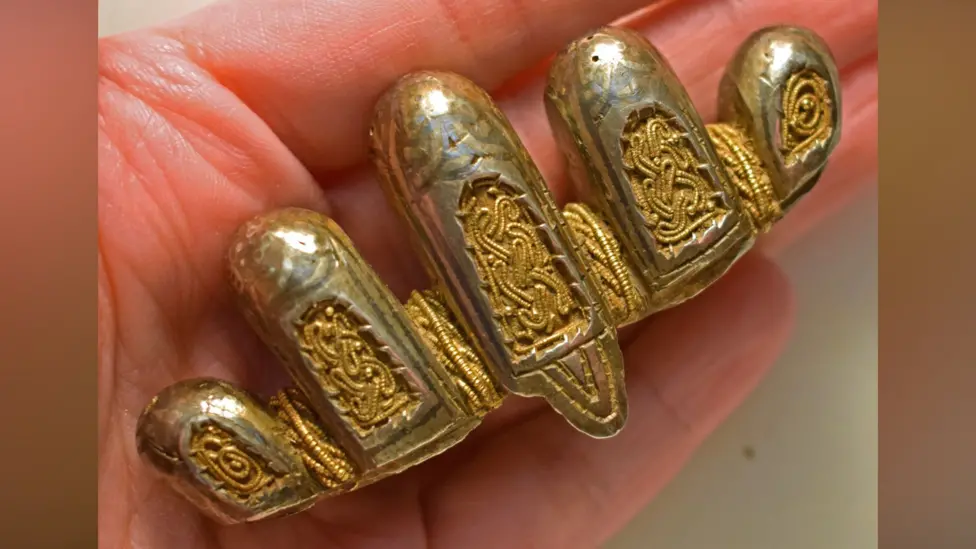
Andy Green, a 56-year-old electrician and beginner metal detectorist, unearthed a rare gold and silver Viking-era sword pommel near Brigstock, Northamptonshire, in 2019. Recently declared official treasure, the five-lobed pommel measures nearly 75mm long, features intricate gold wire beadwork, and is dated between AD 900 and 1120—a period of Scandinavian colonization in the Danelaw region. Experts believe the highly decorated artifact was either crafted in Gotland, Sweden, or made locally by a skilled metalworker from that region for a high-status owner. The find is also linked to a separate gold wire hilt loop discovered nearby in 2018, and a local Northamptonshire museum is currently hoping to acquire the piece for display.
Those four are for England and Wales, where the Portable Antiquities Scheme records finds and the Treasure Act decides what must be reported.
Scotland runs its own system, and every find is reportable there — not only treasure. Treasure Trove Unit ›
The Republic of Ireland is different again, and severely so. Searching for archaeological objects without the Minister’s written consent is a criminal offence carrying fines or imprisonment, and the definition is broad enough to cover coins, buttons and buckles of almost any age. Do not assume British rules travel with you. The law, from the National Museum ›
Northern Ireland is stricter still. The Treasure Act applies and finds go to National Museums NI within fourteen days, but any searching that involves digging — metal detecting expressly included — needs a licence, and licences are only granted for archaeological projects. National Museums NI ›
This site covers discoveries from all over the world, and so does the variation in the law — from a recording scheme that thanks you, to a criminal offence. Wherever you are searching, find out what applies there before you go, not after.