'Extremely rare' 14th century gold ring found by detectorists in Suffolk
Discovery photographs
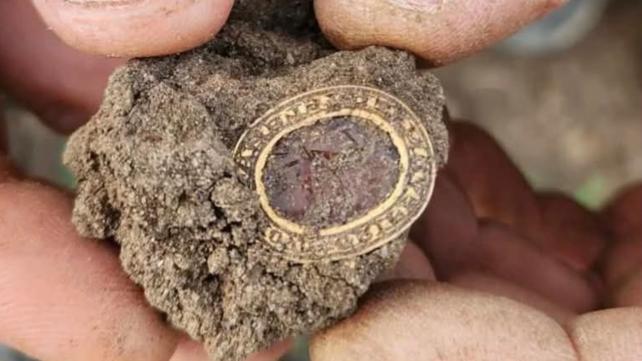
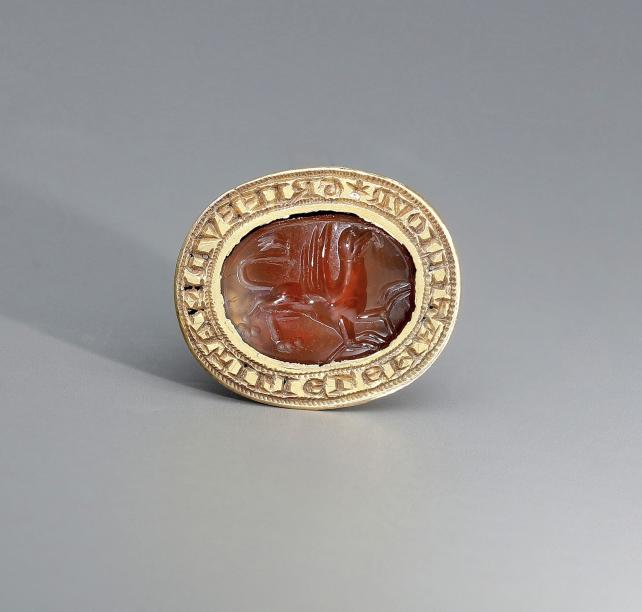
A pair of metal‑detectorists searching farmland near Stoke Ash in Suffolk uncovered an exceptionally rare 14th‑century medieval gold seal ring, likely once owned by Matilda of Lancaster, Countess of Ulster. After a slow morning and a near‑abandoned faulty headset, Aaron Pizzey struck a strong signal and unearthed the gold ring, which features a carnelian intaglio of a griffin and a Lombardic inscription. The find was reported to the local liaison officer and is now heading to auction at Noonans Mayfair, where it is expected to fetch £10,000–£12,000, with the proceeds split between the detectorists and the landowner.
Reported by East Anglian Daily Times. The full report is linked below.
Those four are for England and Wales, where the Portable Antiquities Scheme records finds and the Treasure Act decides what must be reported.
Scotland runs its own system, and every find is reportable there — not only treasure. Treasure Trove Unit ›
The Republic of Ireland is different again, and severely so. Searching for archaeological objects without the Minister’s written consent is a criminal offence carrying fines or imprisonment, and the definition is broad enough to cover coins, buttons and buckles of almost any age. Do not assume British rules travel with you. The law, from the National Museum ›
Northern Ireland is stricter still. The Treasure Act applies and finds go to National Museums NI within fourteen days, but any searching that involves digging — metal detecting expressly included — needs a licence, and licences are only granted for archaeological projects. National Museums NI ›
This site covers discoveries from all over the world, and so does the variation in the law — from a recording scheme that thanks you, to a criminal offence. Wherever you are searching, find out what applies there before you go, not after.