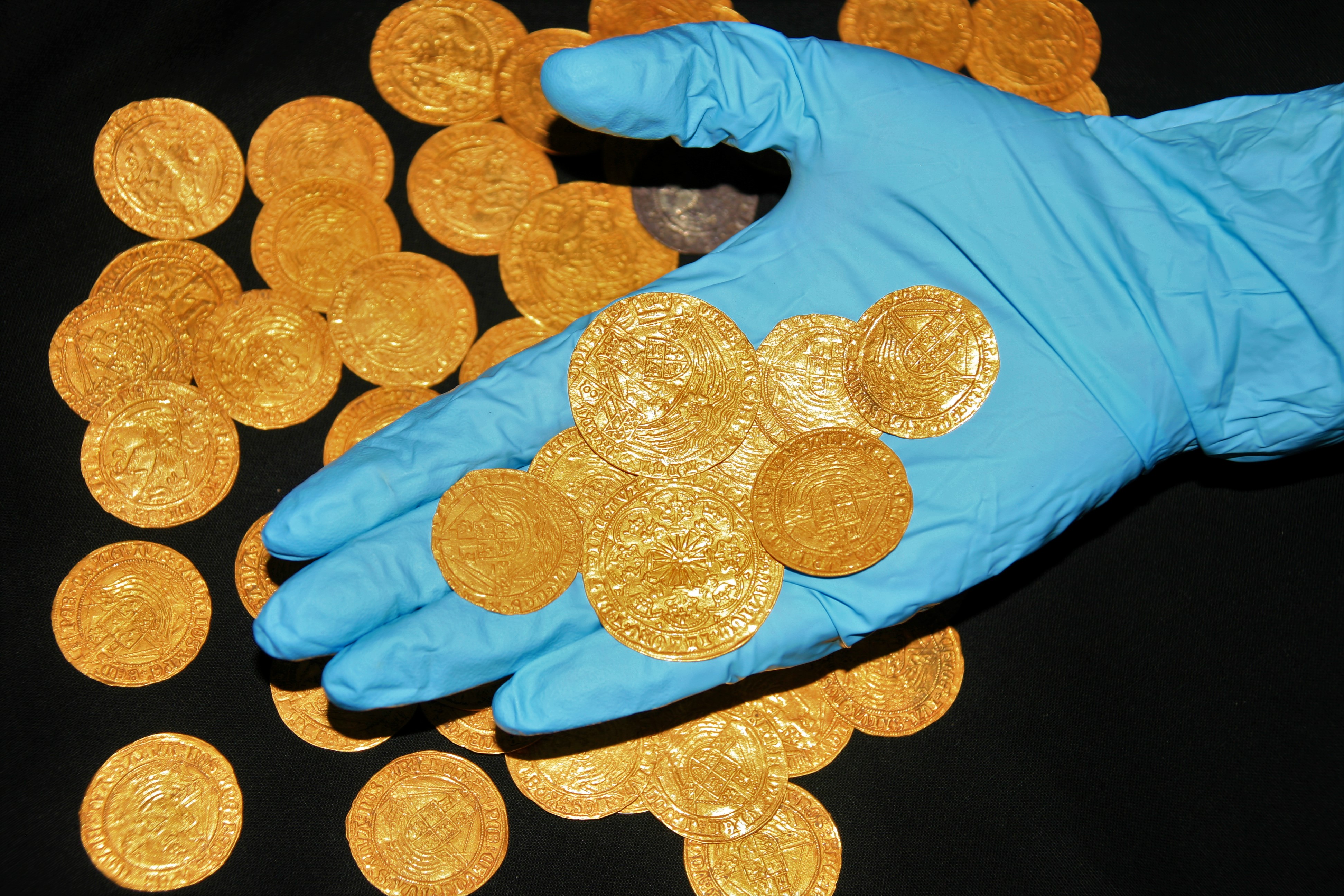
Detectorist's shipwreck treasure on display at Swansea museum
Metal detectorist Peter Hughes spent over two decades uncovering a vast hoard of treasure from the 1583 wreck of the ship *Ann Francis*, which was lost off Margam Beach in Neath Port Talbot during a violent storm. His discoveries—made after coastal storms shifted the sand concealing them—include approximately 870 gold and silver coins, personal items, drinking utensils, a boatswain's whistle, and an unopened brass combination lock. Highlighting a key period in Welsh maritime history, the full collection of artefacts has now gone on public display for the first time at the National Waterfront Museum in Swansea, while the stretch of beach where they were found has been designated a protected site to prevent further detecting.
Those four are for England and Wales, where the Portable Antiquities Scheme records finds and the Treasure Act decides what must be reported.
Scotland runs its own system, and every find is reportable there — not only treasure. Treasure Trove Unit ›
The Republic of Ireland is different again, and severely so. Searching for archaeological objects without the Minister’s written consent is a criminal offence carrying fines or imprisonment, and the definition is broad enough to cover coins, buttons and buckles of almost any age. Do not assume British rules travel with you. The law, from the National Museum ›
Northern Ireland is stricter still. The Treasure Act applies and finds go to National Museums NI within fourteen days, but any searching that involves digging — metal detecting expressly included — needs a licence, and licences are only granted for archaeological projects. National Museums NI ›
This site covers discoveries from all over the world, and so does the variation in the law — from a recording scheme that thanks you, to a criminal offence. Wherever you are searching, find out what applies there before you go, not after.