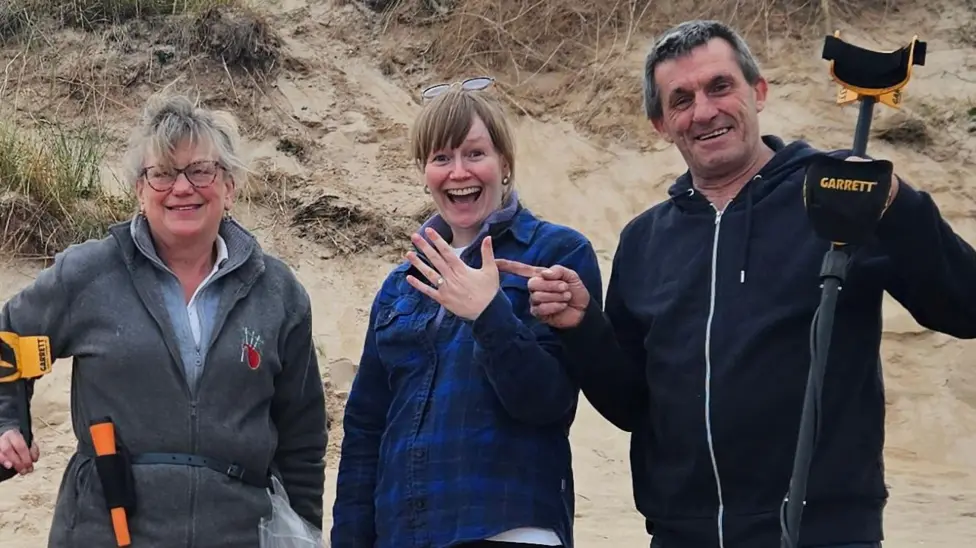
Olympic gold medalist loses Cartier rings. JoCo man with metal detector finds them
Olympic long jump champion Tara Davis-Woodhall and her husband, Paralympic sprinter Hunter Woodhall, enlisted Overland Park treasure hunter Ed Rogers after two Cartier rings—valued at over $10,000—flew off her hand while she was throwing grapefruit to deer in their Wamego, Kansas, backyard. Rogers, who runs the YouTube channel Hi Ho Silver and lists his services on RingFinders.com, travelled to their estate and located both the classic gold band and a diamond-encrusted gold band within 25 minutes using a metal detector. Unaware at the time that he was helping two renowned Olympic stars, Rogers returned the jewellery for his standard $100 travel fee plus an undisclosed reward from the couple.
Reported by kansascity.com. The full report is linked below.
Those four are for England and Wales, where the Portable Antiquities Scheme records finds and the Treasure Act decides what must be reported.
Scotland runs its own system, and every find is reportable there — not only treasure. Treasure Trove Unit ›
The Republic of Ireland is different again, and severely so. Searching for archaeological objects without the Minister’s written consent is a criminal offence carrying fines or imprisonment, and the definition is broad enough to cover coins, buttons and buckles of almost any age. Do not assume British rules travel with you. The law, from the National Museum ›
Northern Ireland is stricter still. The Treasure Act applies and finds go to National Museums NI within fourteen days, but any searching that involves digging — metal detecting expressly included — needs a licence, and licences are only granted for archaeological projects. National Museums NI ›
This site covers discoveries from all over the world, and so does the variation in the law — from a recording scheme that thanks you, to a criminal offence. Wherever you are searching, find out what applies there before you go, not after.